Has this ever happened to you… you tighten a pressure gauge and it ends up facing the wall?
You’re installing a pressure gauge with an NPT thread. You keep tightening, it seems to seal properly… and just when it’s “right”, the dial ends up rotated 90° or 180°. Poorly oriented. Impossible to read.
And then the classic workshop question comes up:
“How do you properly orient an NPT pressure gauge without ending up with leaks at the thread?”
Prefer to watch it in 3 minutes instead of reading?
Here’s a short video where I explain exactly how a swivel NPT nut works and why it solves the orientation issue without causing leaks.
The real problem with NPT isn’t the gauge — it’s the thread
NPT threads are tapered. That means the diameter changes along the length, and sealing occurs on the thread flanks.
Typically, PTFE tape or thread sealant is used to ensure tightness and reduce the risk of galling.
And this is where the classic “NPT connection problems” start:
If you tighten until it seals… the final orientation might not be what you need.
If you back it off slightly to align it… you’ve just broken the seal you created (and if you used sealant, you may shear it and create micro-leak paths).
If you overtighten to get the right position… you can damage the thread or cause galling — very common with stainless steel-to-stainless steel tapered threads.
In short: with NPT, orientation and sealing are tied to the same action.
What is a swivel nut (and why you’re probably not using one yet)
There are many names for it: swivel nut, free-spinning female, rotating fitting. Different terms, same idea:
being able to tighten a connection without forcing the component you want to keep oriented to rotate.
From a mechanical point of view, a proper swivel fitting separates two functions:
The thread provides the mechanical tightening
The sealing happens on a dedicated sealing surface (seat, cone, gasket, washer…), not on the thread itself
This is exactly how BSPP (“G”) connections work, commonly used in European instrumentation: the thread is parallel, and sealing is achieved with a washer or gasket.
That makes installation more repeatable — and disassembly much safer for the threads.
The common mistake: looking for an “NPT swivel nut” as if it worked like BSP
This is the key point (and what avoids a lot of bad practices in the field).
A traditional “NPT swivel female”, understood as a freely rotating NPT thread that seals the same way, doesn’t really exist in the same way as parallel-thread systems.
Why? Because NPT is designed to seal on the tapered thread itself.
If you simply make that thread “free to rotate”, you lose the interference/wedging effect that creates the seal.
So when someone asks for an “NPT swivel female”, what they actually mean is:
“I need a swivel NPT fitting that allows me to orient a pressure gauge (or transmitter, or small valve), and then lock it in position… without depending on where the taper ‘stops’.”
The classic installation mistakes
There are three very typical issues in the field:
1. Backing off to orient With shaped fittings (elbows, tees, adapters) or instruments, it’s not good practice to tighten, seal… and then back off to align.
You can break the seal continuity and create leak paths.
2. Overtightening to force alignment Most manufacturers warn about this:
NPT gives you a small rotational margin once sealing starts, but pushing it too far can lead to:
Thread damage
Galling (very common in stainless steel-to-stainless steel)
3. Mixing threads because “it kind of fits” The BSP vs NPT difference is not just the name:
BSP flank angle: 55°
NPT flank angle: 60°
Often different pitch as well
Typical result: it jams after a few turns… or creates spiral leak paths.
All of this leads to the usual “NPT connection problems” in the field — and a lot of time chasing micro-leaks.
The solution: a swivel NPT system with independent tightening
At Redfluid, we kept seeing the same scenario:
Instrumentation with NPT threads (very common in 1/4″ or 1/2″ pressure gauges) and a real need to orient the instrument without compromising sealing.
So the key idea is simple:
If NPT seals on the thread, but you need free orientation… you must separate orientation from sealing.
How the swivel NPT solution works
The solution is a swivel NPT assembly (also searched as swivel NPT fitting or rotating NPT connector), designed so that:
One side is fixed to the installation via its NPT thread
The other side allows you to position and orient the instrument exactly where you want
Final tightening is done through a swivel nut (independent tightening) that locks the position and activates the internal seal
No more guessing “half a turn more or less” on a tapered thread.
What you gain in practice
You can orient the gauge exactly where it needs to face
Easier installation in tight spaces (less stress on the instrument body)
Repeatable assembly/disassembly without relying on the exact same thread position
Available configurations depending on your installation
Once you understand the concept, the next question is usually:
“Okay… but how do I install this in my specific case?”
Because not all setups are the same.
Some people need to connect a pressure gauge directly. Others are working from an existing line. And others simply want to adapt a connection without overcomplicating things.
That’s why at Redfluid we offer different swivel NPT configurations, so you can adapt the solution to your installation:
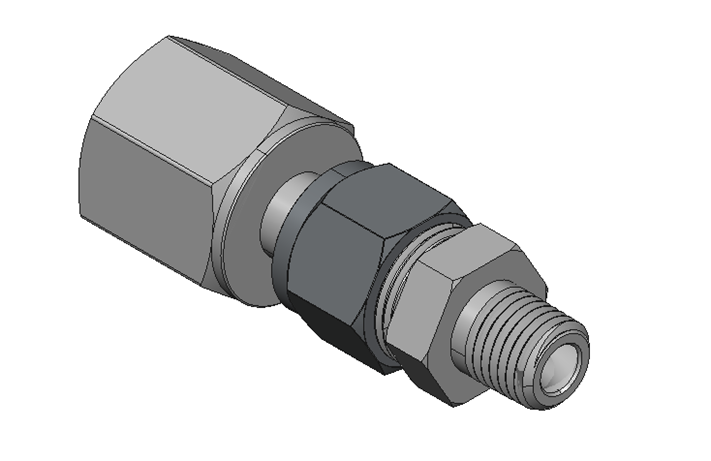
Male x Female
The most common option in instrumentation.
It allows you to connect directly to an existing female thread and orient the instrument without forcing the tightening.
The most straightforward solution for pressure gauges and transmitters.
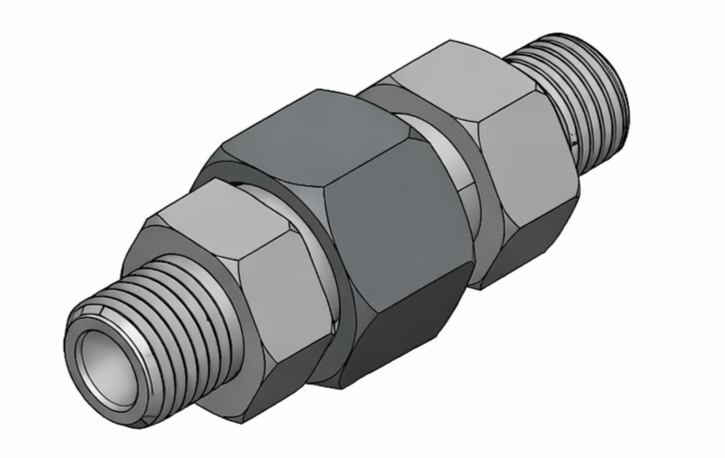
Male x Male
Designed for in-line adaptations or when you need to install the fitting between two components.
Very useful when you already have an existing setup and want to add orientation capability.
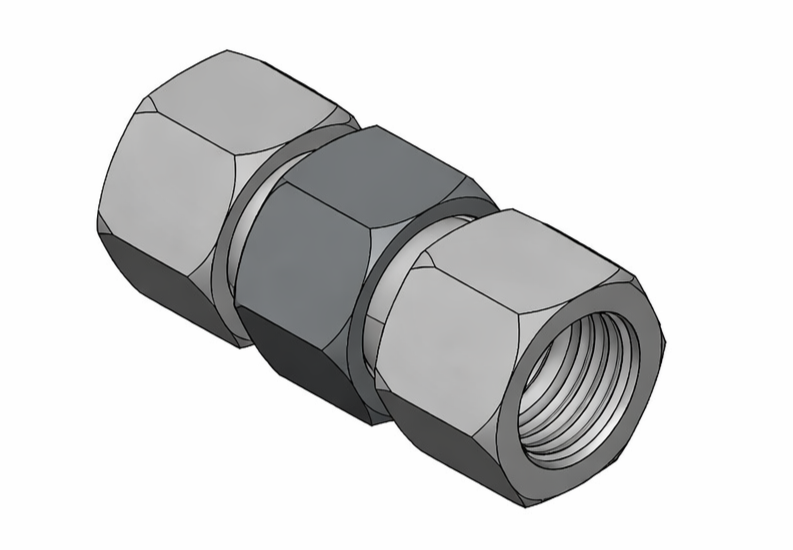
Female x Female
Ideal when you need to connect two male components without modifying the installation.
You keep your original configuration while adding the benefit of a swivel connection.
If you’re working with NPT connections and need this kind of solution…
If you’re currently dealing with an installation where the NPT pressure gauge doesn’t end up properly oriented, or you’ve been asked for an “NPT swivel nut” and don’t want to improvise, the easiest way forward is to look at a real technical solution.
Leave us your email and we’ll send you the technical datasheet along with compatible options (sizes, materials, and typical configurations for instrumentation).
Do you have this issue in your installation?
Tell us about your setup (thread type, instrument, pressure/medium, and available space). We’ll let you know whether this solution fits — or if there’s a simpler alternative.
Sounds familiar? The technician looks for a fitting, maintenance can’t find it, purchasing places an urgent order “for yesterday”… In the end, production gets delayed,
What is Type Approval for marine and offshore components, and why does it matter? Type Approval is a certification process by which a classification society